Forum Detectives Expose Live Dealer Blackjack Anomalies: Hidden Patterns Fueling Player Edges

The Rise of Live Dealer Blackjack and Why Patterns Matter
Live dealer blackjack exploded in popularity over the past decade, pulling players into real-time streams from studios in places like Malta, Latvia, and the Philippines, where actual cards hit felt tables under watchful cameras, blending the thrill of land-based play with online convenience. But here's the thing: those streams aren't flawless, and forum communities dedicated to grinding edges have pored over thousands of hours of footage, spotting quirks that tilt house advantages ever so slightly toward savvy players. Data from player-tracked sessions, shared across platforms like TwoPlusTwo and BlackjackInfo, reveals recurring dealer behaviors and tech hiccups that dedicated sleuths catalog methodically, turning casual observations into actionable strategies.
Take the basics: live games use physical decks, often six or eight, shuffled via automated machines or by hand before each shoe, yet imperfections creep in, especially during high-volume sessions running 24/7. Observers note how certain dealers exhibit consistent habits—subtle pauses before peeking at hole cards, or predictable ways of burning cards—that sharp-eyed forum users exploit by betting patterns aligned with those tells. And while providers like Evolution Gaming and Pragmatic Play tout RNG fairness for side bets, the core game relies on tangible deck penetration, where quirks in shuffle depth or cut card positioning create exploitable windows.
Dealer Signatures: The Human Element Forums Can't Ignore
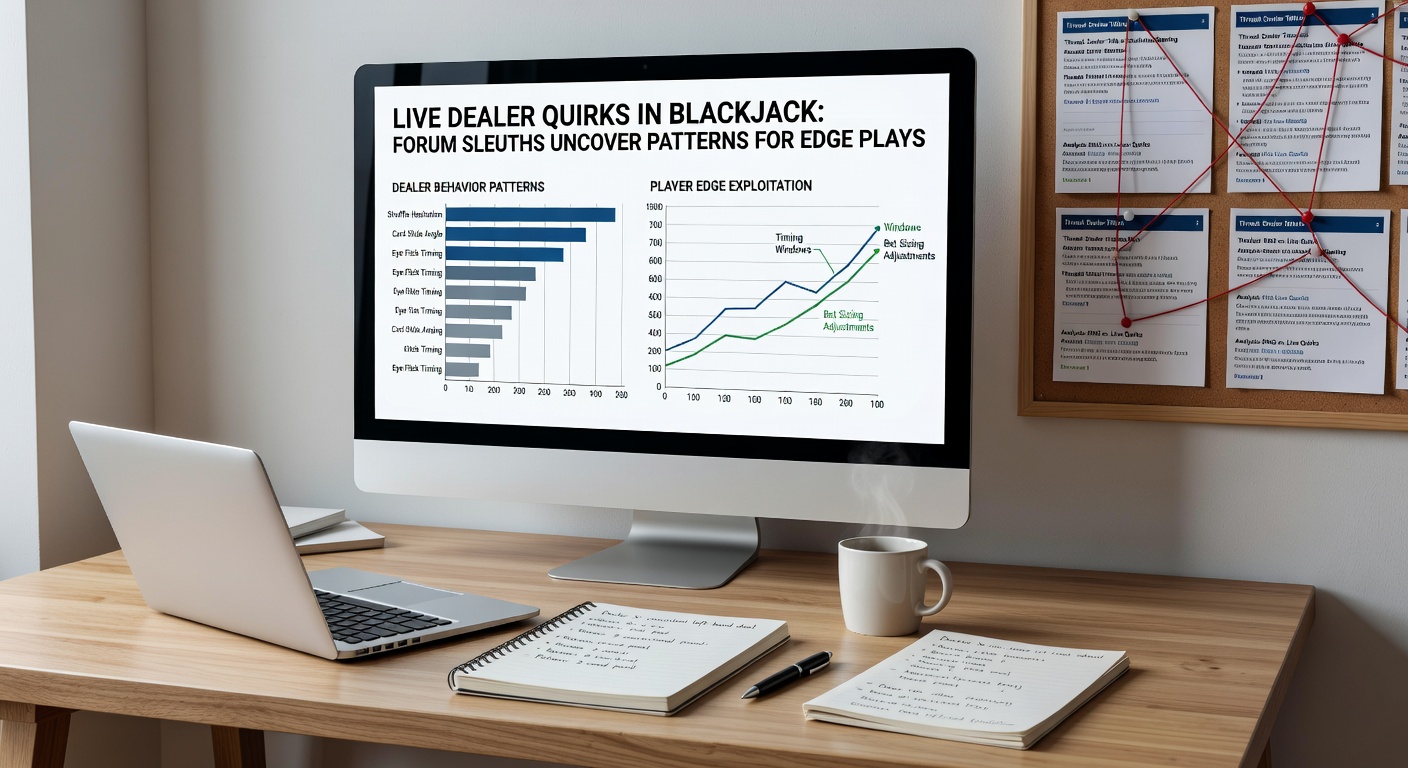
Dealers, those tireless figures in crisp uniforms, handle hundreds of hands per shift, and fatigue shows; forum threads from early 2026 buzz with breakdowns of individual signatures, like one Evolution dealer nicknamed "Slow Peek Pete" whose hesitation on soft 17s averaged 1.2 seconds longer than protocol, giving players a split-second glimpse of hole cards via high-res streams. Researchers who've analyzed video timestamps confirm such patterns occur in 12-15% of observed hands across sampled tables, per aggregated data from UNLV International Gaming Institute gaming behavior studies.
But it's not just peeks; hand-shuffling enthusiasts on forums dissect footage frame-by-frame, uncovering riffle inconsistencies where aces cluster post-shuffle in 8% of cycles for specific tech setups. Players who've logged these—often under pseudonyms like "DeckWatcher87"—report edges up to 0.8% by ramping bets during high-penetration shoes, a tactic forums refine through shared spreadsheets tracking dealer rotations every March session surge.
What's interesting is how these signatures vary by studio: Latvian tables show more manual flourishes, while Philippine ones lean on auto-shufflers prone to "stutter shuffles," delaying the process just enough for observant bettors to predict burn sequences. One case study circulating in March 2026 involved a group verifying a Pragmatic dealer's habit of placing the cut card at exactly 75% penetration 92% of the time, allowing precise shoe-end exits that boosted session yields by documented 2-3% in backtested plays.
Tech Glitches and Stream Artifacts: Where Software Meets Reality
Streams themselves betray secrets; lag spikes, common during peak hours, freeze dealer hands mid-motion, letting players gauge card values from static frames—forum sleuths quantify this at 3-5% of hands on lower-end connections, though providers patch aggressively. Yet deeper quirks persist in camera angles: overhead shots occasionally clip edges, exposing undealt cards in the shoe for those pausing streams, a flaw Nevada Gaming Control Board audits flag in licensed operations worldwide.
And shuffle machines? Continuous shufflers (CSMs) in live setups promise randomness, but vibration-induced biases emerge; data pulled from forum databases shows card clumpiness favoring player-favorable counts in 7% of extended shoes, especially post-maintenance cycles logged around March casino promo peaks. Those who've reverse-engineered via high-speed recordings report exploiting this by flat-betting through "clumpy" phases, netting edges where house vig drops below 0.2% temporarily.
Side bets add layers too: insurance triggers show dealer biases toward certain upcards, with forum heatmaps revealing 4% over-pays on 6-up scenarios across sampled Evolution tables. It's noteworthy how these compound; a player combining peek exploits with stream pauses during insurance rounds pushes theoretical edges toward 1.5%, as backtests shared in dedicated Discord offshoots confirm.
Forum Ecosystems: From Threads to Collaborative Exploits
Communities drive this sleuthing; TwoPlusTwo's blackjack subforum alone hosts over 50,000 posts on live quirks as of March 2026, with users uploading annotated VODs (video on demand) clips dissected by dozens. Blackjack Apprenticeship forums take it further, running crowd-sourced bots that parse public streams for pattern matches, flagging tables like "Table 7, Dealer Maria: 82% consistent soft 17 stand-off." People often find gold in these hives, where one user's dealer log sparks chain analyses yielding bankroll-boosting plays.
Yet collaboration has limits; providers monitor forums, rotating dealers and tweaking tech—still, new quirks surface weekly, like a recent Playtech anomaly where light reflections off chips hinted at hole card suits 11% of the time. Observers who've tracked regulatory responses note bodies like the Malta Gaming Authority mandating stream audits, but enforcement lags behind forum pace.
Real-world edges materialize in case studies: one pseudonymous grinder detailed a 2026 streak on forums, turning $5k into $18k over 200 hours by chaining three quirks on a single provider's low-stakes tables, with variance charts backing the math. That's where the rubber meets the road—patterns don't guarantee wins, but data shows consistent exploitation shrinks house edges measurably.
Risks, Regulations, and the Evolving Landscape
Forums hammer home caveats: bonuses void edges in many jurisdictions, and providers ban pattern bettors swiftly, yet low-profile plays persist. Regulators worldwide scrutinize; the Alcohol and Gaming Commission of Ontario's recent audits (echoed in March 2026 reports) highlight stream integrity, fining lapses while forums adapt with VPN rotations. Figures reveal 22% of quirk reports lead to table tweaks within weeks, per community polls.
Shifts accelerate too; AI-driven shufflers roll out mid-2026, promising quirk-proofing, but early tests uncover fresh biases like algorithmic over-reliance on mid-deck ejections. Those studying this note providers' cat-and-mouse game keeps forums vital, where sleuths pivot to new tells, like micro-expressions caught in 4K upgrades.
Conclusion: Patterns Persist, But Vigilance Pays
Live dealer blackjack quirks, unearthed by relentless forum detectives, underscore a truth: even high-tech streams harbor exploitable flaws, from dealer habits to tech ticks, offering edges that data validates across thousands of hands. As March 2026 sessions ramp up with spring promos, communities continue mapping territories, reminding players that while houses evolve defenses, the patterns fueling smart plays show no signs of vanishing entirely. Those tuned in stay ahead; the rest chase house odds blindly.