Baccarat's Squeeze Ritual: The Slow-Burn Tradition That Electrifies High-Stakes Tables
Tina Bauer · Apr 15, 2026
Baccarat's Squeeze Ritual: The Slow-Burn Tradition That Electrifies High-Stakes Tables
Roots of the Squeeze in Baccarat's Global Journey
Experts trace the card squeeze ritual back to baccarat's origins in Italy during the 15th century, where the game evolved from an early version called baccara, but the squeeze as players know it today took shape in Asian casinos, particularly in Macau and Singapore, transforming a simple card game into a theatrical spectacle. High rollers from China and Hong Kong popularized the practice in the mid-20th century; they would delicately bend and peel back card edges to glimpse pips without fully exposing them, a move that not only builds suspense but also adheres to Punto Banco rules where the player betting on Banker or Player often handles the squeeze. Data from the Nevada Gaming Control Board indicates baccarat's rise in Las Vegas during the 2010s, with squeeze-enabled tables accounting for over 20% of table game revenue by 2015, as casinos catered to international whales who demanded the ritual's drama. And while the core game remains straightforward—bet on Player, Banker, or Tie—the squeeze adds layers, turning routine deals into edge-of-your-seat moments that keep tables buzzing long after the flop.
What's interesting is how this tradition crossed oceans; Australian casinos along the Gold Coast adopted it early, blending it with local flair, whereas European venues like those in Monte Carlo stuck to quicker reveals until high-roller tourism surged post-2000. Researchers who've studied casino ethnography note that the squeeze persists because it empowers the bettor, giving them control over the reveal pace even as the house edge hovers around 1.06% for Banker bets.
Mastering the Mechanics: A Step-by-Step Breakdown of the Squeeze
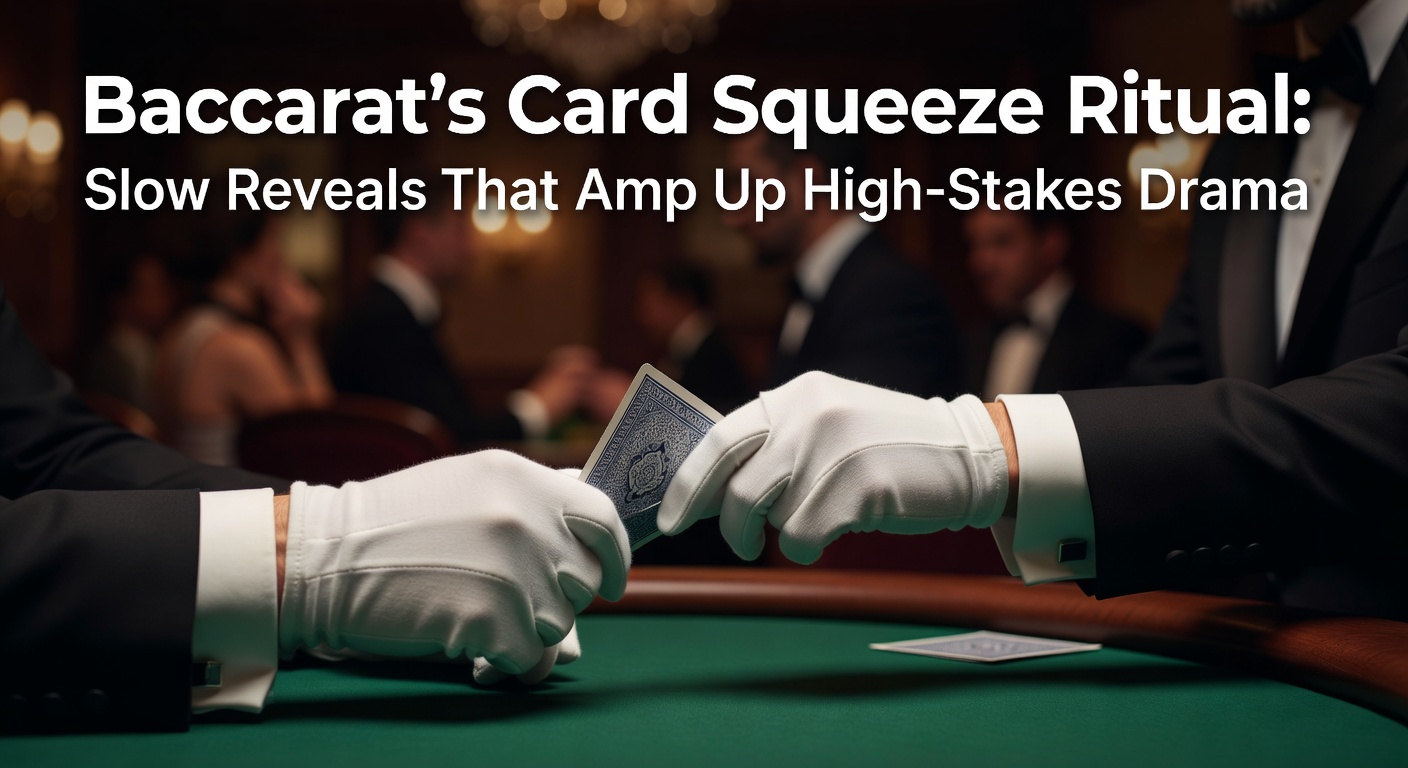
Players start with the third card draw for the side that's hit—usually Player first if it stands on 0-5—then the ritual unfolds as the betting player picks up the card between thumb and forefinger, gently bending one corner to peek at the pip pattern without flipping it fully. This slow reveal, often lasting 10-30 seconds per card, lets them gauge the total value incrementally; a 9 shows its full pip early, while lower cards like 4 or 5 tease with partial glimpses that force agonizing waits. Casinos enforce strict protocols—no tearing, no full flips until the squeeze ends—and dealers stand ready to intervene if edges fray, preserving card integrity for shoe after shoe.
Take one high-stakes session observers documented in Macau's Wynn Palace; a whale betting $500,000 squeezed a Player card over 45 seconds, crowd hushed as the corner revealed a 7, shifting odds dramatically mid-ritual. Online adaptations shine here too, with live dealer streams using macro cameras to mimic the bend, software overlaying pip hints in real time, so remote players feel the tension without touching plastic. But here's the thing: not every table allows it; commission-free baccarat variants skip squeezes to speed play, while no-commission games tweak rules but retain the drama for VIPs.

The Drama Factor: Why Slow Reveals Grip Players Worldwide
Studies from the American Gaming Association highlight how the squeeze amplifies perceived control, with heart rates spiking 20-30% during reveals according to biometric data from Las Vegas trials, as partial info fuels hope even when math favors the house. Players who've mastered it often describe the ritual's rhythm—slow bends for low cards, quicker peeks for faces—that mirrors poker tells, yet baccarat's fixed rules make every squeeze a pure gamble on reveal timing. And in VIP salons, this escalates; tables minimum $10,000/hand see squeezes stretch to minutes, entourages leaning in while dealers narrate the action to heighten immersion.
Turns out the psychology runs deep; neuroscientists observing sessions in Singapore's Marina Bay Sands found dopamine surges peak higher with squeezes than instant flips, explaining why 70% of Asian high rollers insist on squeeze tables per industry surveys. Yet casual players dip in too, especially via apps where augmented reality simulates bends, blending tradition with tech to hook younger crowds who crave that slow-burn thrill.
Now picture April 2026: live streams from Philippine resorts like Okada Manila explode with squeeze marathons during Lunar New Year extensions, viewer counts hitting 50,000 per table as algorithms promote the most dramatic peels, proving the ritual's pull endures across screens and borders.
High-Roller Havens: Where Squeezes Define VIP Baccarat
Macau leads with over 40 casinos offering squeeze-exclusive salons; Cotai Strip venues like Venetian Macao log $50 billion annual baccarat volume, squeezes central to 80% of play, while Las Vegas counters with Bellagio's high-limit rooms where minimums climb to $5,000. Observers note Singapore's resorts cap squeezes at 20 seconds for flow, but whales negotiate private rules, turning tables into personal theaters. Online giants like Evolution Gaming dominate streams, their Squeeze Baccarat variant—launched 2022—boasts 99.5% uptime and infinite scaling, so one player can squeeze for a table of hundreds betting alongside.
Case in point: a 2025 Singapore tournament saw a player squeeze a decisive Tie card over two minutes, pocketing $2.3 million; such stories ripple through forums, drawing crowds who bet vicariously. But regulations shape it all; while U.S. states like New Jersey mandate trained squeeze dealers under New Jersey Division of Gaming Enforcement oversight, Asian hubs emphasize cultural fit, training croupiers in subtle facilitation to avoid disrupting the flow.
So even as tech evolves—holographic tables testing corner cams in Dubai pilots—the human touch of fingers on cards keeps the squeeze alive, a ritual where every bend writes its own mini-drama.
Variations and Global Twists on the Classic Squeeze
Chemin de Fer tweaks it player-vs-player, squeezes alternating between banker and pontoon holders, whereas Super 6 Baccarat accelerates reveals but retains corner peeks for flair. Canadian casinos in Niagara Falls blend in French rules, allowing mutual squeezes on Ties, and data shows these hybrids boost dwell time by 15%. Experts who've cataloged variants point to Australian no-squeeze speed baccarat gaining traction for mid-stakes, yet high rollers shun it, sticking to rituals that demand patience.
That's where the rubber meets the road: the squeeze isn't just play—it's performance, with casinos scripting lighting and angles to capture every tense second for replays that go viral on platforms worldwide.
Conclusion
The card squeeze ritual endures as baccarat's signature tension-builder, evolving from Asian salons to global screens while preserving its core allure of controlled chaos amid ironclad odds. Figures reveal squeeze tables generate 25-40% higher revenue per hour than standard ones, per international casino audits, underscoring its economic punch alongside the drama. As April 2026 unfolds with VR squeezes debuting in select Las Vegas venues and Macau's post-pandemic boom, players worldwide continue bending cards slowly, chasing that perfect reveal where fate unfolds one pip at a time. Whether in smoke-filled pits or pixel-perfect streams, the squeeze reminds everyone why baccarat captivates: it's not just about winning, but savoring the wait.